The Death of the "Blank": Why Your Brand Needs Bespoke Silhouettes to Survive
Bespoke silhouettes are the new standard for technical luxury in 2026. Learn why generic blanks are killing streetwear brands and how to transition to engineered garment architecture using high-GSM fabrics and precision manufacturing to scale your label effectively.
2/23/20263 min read
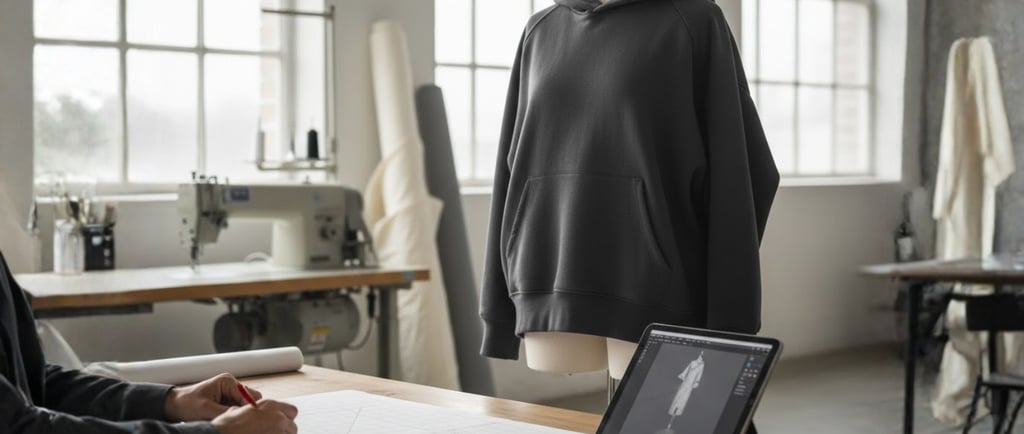
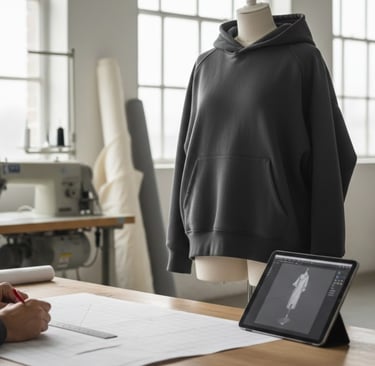
In the early days of streetwear, you could build an empire on a screen-printed blank. But as we move further into 2026, the "blank era" is officially over. Today’s consumer is hyper-educated; they can spot a generic wholesale fleece from a mile away, and they are no longer willing to pay luxury prices for basic catalog items.
If you want to build a brand that lasts, you have to stop "printing" and start engineering.
The "Generic Trap"
Most emerging brands fall into the same cycle: they source a standard blank, add a graphic, and wonder why they can’t scale. The reality is that blanks offer no competitive advantage. When your silhouette is the same as every other brand on Instagram, you are competing solely on price—a race to the bottom that no luxury label can win.
To truly stand out, you need a unique architecture. This starts with Premium Fabric Sourcing and ends with a silhouette that belongs entirely to your brand.
Why Bespoke Silhouettes Are the New Luxury
"Technical Luxury" is defined by the fit, the drape, and the weight of a garment. When you move away from generic blanks to bespoke silhouettes, you gain control over:
Garment Architecture: Engineering a drop-shoulder or a cropped hem that is mathematically designed for your target demographic.
Structural Integrity: Using 450 GSM Heavyweight Fleece ensures the garment holds its shape, something a standard 280 GSM blank can never achieve.
Brand DNA: A custom fit becomes your brand’s "signature." It’s why people buy Rick Owens or Fear of God—they are buying the silhouette as much as the label.
The Hook: If your brand's "luxury" tag doesn't match the GSM and engineering of the fabric, your customers will eventually find a brand that does.
Bridging the Gap: From Concept to Production
Moving to bespoke production can feel daunting, especially when trying to scale from 100 to 1,000 pieces. This is where Custom Apparel Studio excels. We don't just sew fabric; we engineer silhouettes that are retail-ready and technically superior.
By partnering with a Technical Apparel Studio, you ensure that your first bespoke collection doesn't just look good on a tech pack—it performs in the real world.
Final Thoughts
The brands that will survive the next five years are the ones that invest in original patterns and technical textiles. Don't let your brand die in a generic blank. It’s time to start building for the long haul.
Ready to engineer your signature silhouette? Book a Design Consultation today and let’s move your brand into the era of Technical Luxury.
Frequently Asked Questions
1. What is the difference between a "blank" and a bespoke silhouette? A "blank" is a mass-produced, off-the-shelf garment designed to fit as many people as possible, often sacrificing specialized fit and high-end construction. A bespoke silhouette is engineered from the ground up by a Technical Apparel Studio, featuring original patterns, specific GSM weights, and unique measurements tailored to a brand’s specific DNA.
2. Why is fabric GSM important for luxury streetwear? GSM (Grams per Square Meter) measures the density and weight of the fabric. In luxury streetwear, a 450 GSM heavyweight fleece is the industry standard for 2026 because it provides the structured, "boxy" drape that customers associate with high-end engineering, whereas standard blanks often feel thin and lose shape over time.
3. Is it more expensive to manufacture bespoke clothing than using blanks? While the initial development costs for tech packs and specialized patterns are higher, bespoke manufacturing allows for better long-term scaling. By scaling production from 100 to 1,000 pieces with custom patterns, you create a proprietary product that justifies a higher retail price point and builds stronger brand loyalty.
4. How do I transition my brand from blanks to custom manufacturing? The transition begins with a Design Consultation to audit your current fits. You will move from simple graphic placement to "Garment Architecture," which involves creating technical tech packs that communicate every specific construction detail to the factory floor to ensure precision.
5. Can I use sustainable natural fibers for bespoke silhouettes? Absolutely. We specialize in Premium Fabric Sourcing for natural and technical fibers like Lyocell, organic cotton, and hemp. These materials are ideal for bespoke engineering because they offer unique performance characteristics and sustainability benefits that standard polyester-blend blanks cannot match.
Contact
Reach out for custom orders or questions
Phone
© 2025. All rights reserved.